
Meander, Spiral, Explode
Book Review

Writing fiction shouldn’t be reduced to a formula. The traditional rising action - climax - denouement narrative arc has its appeal, but a good story has to do more than connect the dots (and don’t get me started on theories about there only being six or seven plots, or Joseph Campbell’s silly monomyth). Large language models can produce text that follows a formula perfectly, but fiction written by LLMs is easily recognizable by its vacuous content. While nothing’s impossible, it’s hard to imagine an artificial intelligence ever gaining the curiosity, empathy, and desire to craft appealing fiction.
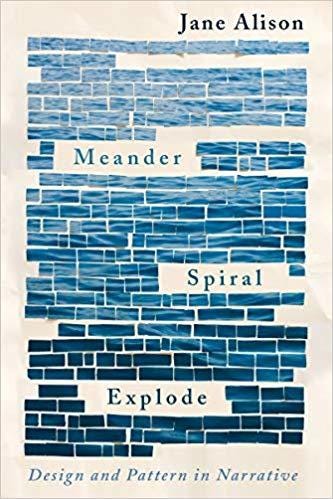
One way to avoid relying on a reductive theory of fiction writing is to recognize alternative patterns to the narrative arc, which is what Jane Alison does in her 2019 craft book. Alison recognizes the power in the wave-like form of the narrative arc, “its sense of beginning, midpoint, and end; no wonder we fall into it in stories.” Yet the wave is not the only natural pattern that fiction can take; through insightful readings of dozens of literary texts (her book led me to read Nicholson Baker’s delightful novel), Alison shows how fiction can meander like a river rather than proceed in a direct line to its end, spiral around an idea, radiate from and return to a central point, or form a web of interconnected ideas instead of leading to a single conclusion.
I intend to use Alison’s book during the revision stage, i.e., I’m not going to start a story by deciding to write in a fractal pattern (such early decisions seem destined to produce gimmicky fiction). If I have a draft in the traditional arc/wave format and decide there’s something missing, I’ll examine the alternative patterns described by Alison and see if one provides what I’ve been seeking. Alison’s book doesn’t tell you what to do, but rather shows what you could do - a welcome alternative to reductive theories about how to write fiction.